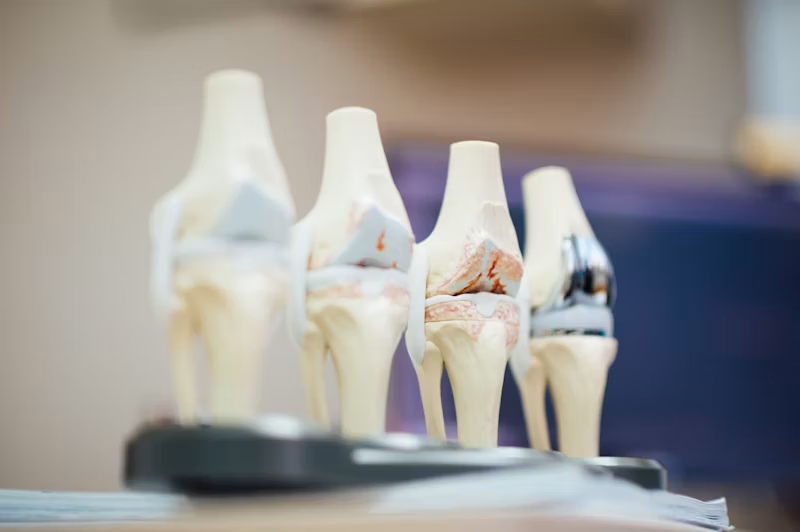
ACL/PCL Reconstruction
ACL and PCL reconstruction are advanced arthroscopic procedures used to restore knee stability after major ligament injuries. These injuries commonly occur during sports, sudden twisting movements, road accidents, or high-impact trauma.
Common Conditions Treated
- Anterior cruciate ligament (ACL) injuries
- Posterior cruciate ligament (PCL) injuries
- Combined ligament injuries
- Sports-related knee injuries
- Recurrent knee instability
Treatment Approach
Treatment begins with a detailed clinical examination and appropriate imaging. When reconstruction is indicated, the injured ligament is replaced with a suitable graft and followed by a structured rehabilitation plan tailored to healing, strength, and activity goals.
Benefits
- Improved knee stability
- Reduced episodes of giving way
- Better support for everyday and sporting activity
- A structured, progressive return-to-activity plan
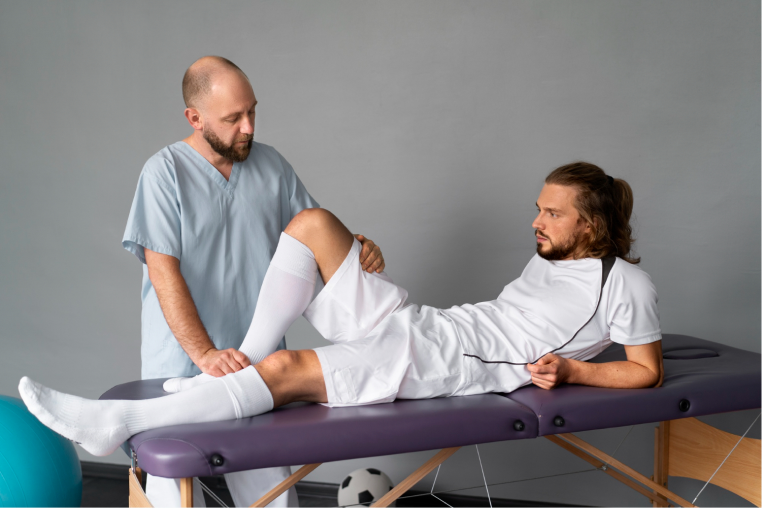
Meniscus Repair
Meniscus repair is considered for suitable tears when preserving the knee’s natural shock-absorbing tissue is possible. The tear pattern, location, tissue quality, symptoms, and associated injuries all influence the treatment plan.
Common Conditions Treated
- Acute traumatic meniscus tears
- Repairable peripheral-zone tears
- Bucket-handle tears
- Meniscus injury associated with ligament damage
Treatment Approach
After examination and imaging, suitable tears may be repaired arthroscopically with sutures or fixation devices. The rehabilitation plan protects the repair while gradually restoring movement, strength, and weight bearing.
Benefits
- Preservation of functional meniscus tissue
- Support for normal load distribution in the knee
- Reduced pain and mechanical symptoms where appropriate
- A staged return to daily and sporting activities

Cartilage Procedures
Cartilage procedures address focal damage to the smooth joint surface of the knee. Treatment is selected according to the size, depth, location, symptoms, alignment, and condition of the surrounding joint.
Common Conditions Treated
- Focal articular cartilage defects
- Osteochondral injuries
- Sports-related cartilage damage
- Pain, swelling, or catching linked to a cartilage lesion
Treatment Approach
Assessment may include X-rays and MRI to map the lesion and identify associated problems. Depending on the findings, care can include rehabilitation, arthroscopic treatment, marrow-stimulation techniques, or a restorative procedure.
Benefits
- Treatment focused on the damaged joint surface
- Support for pain reduction and improved movement
- Protection of healthy surrounding tissue
- A joint-preservation-focused rehabilitation pathway
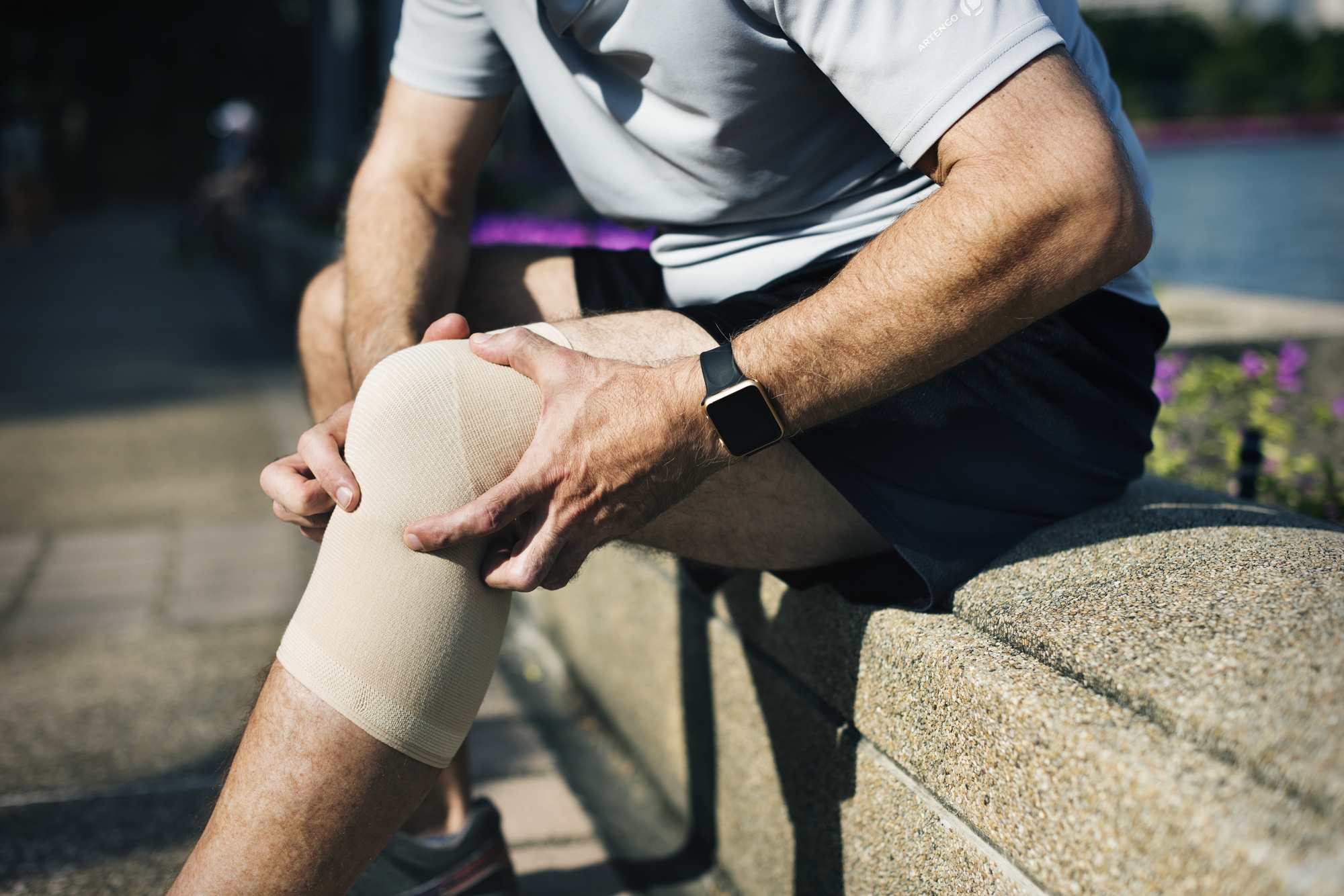
Cartilage Restoration - OATS/Mosaicplasty
OATS or mosaicplasty is a cartilage-restoration option for selected, well-contained defects. Small plugs of healthy bone and cartilage are transferred to recreate a smoother surface over the damaged area.
Common Conditions Treated
- Contained full-thickness cartilage defects
- Selected osteochondral lesions
- Persistent symptoms from a focal defect
- Suitable defects in active patients with otherwise preserved joints
Treatment Approach
Planning considers lesion size and location, limb alignment, ligament stability, and meniscus health. After graft transfer, loading and activity are progressed carefully through a protected rehabilitation programme.
Benefits
- Restoration using mature cartilage from the same knee
- Improved contour of a suitable focal defect
- Preservation of the native joint
- A planned progression back to activity
Multi-Ligament Injury Treatment
Multi-ligament knee injuries involve two or more major stabilising structures and may follow high-energy trauma or a severe sports injury. They require careful assessment because nerves, blood vessels, menisci, or cartilage may also be affected.
Common Conditions Treated
- Combined ACL and PCL injuries
- Collateral ligament injuries
- Knee dislocation-related ligament damage
- Complex multidirectional knee instability
Treatment Approach
Initial care prioritises a complete neurovascular and structural assessment. Bracing, rehabilitation, ligament repair, or staged reconstruction is planned according to the injury pattern, tissue condition, and patient needs.
Benefits
- Coordinated treatment of all injured stabilisers
- Support for multidirectional knee stability
- Protection of associated joint structures
- Rehabilitation matched to a complex injury

Patellar Instability Surgery
Patellar instability surgery may be considered when the kneecap repeatedly dislocates or remains unstable despite appropriate non-surgical care. Treatment is based on the cause of instability rather than a single standard procedure.
Common Conditions Treated
- Recurrent kneecap dislocation
- Medial patellofemoral ligament injury
- Patellar maltracking with instability
- Cartilage or osteochondral injury after dislocation
Treatment Approach
Examination and imaging assess alignment, trochlear anatomy, ligament injury, and cartilage damage. Depending on the findings, treatment may include MPFL reconstruction or a selected alignment procedure followed by staged rehabilitation.
Benefits
- Improved kneecap tracking and stability
- Reduced risk of recurrent instability
- Protection of the patellofemoral joint surface
- Greater confidence during movement and activity
Joint Preservation Procedures
Joint preservation combines treatments intended to protect the patient’s native knee. It is most relevant when symptoms arise from focal cartilage damage, meniscus deficiency, ligament instability, or uneven loading before advanced arthritis develops.
Common Conditions Treated
- Early compartment-specific wear
- Focal cartilage damage
- Meniscus deficiency or repairable injury
- Alignment-related overload and instability
Treatment Approach
A cause-specific plan may combine activity modification, rehabilitation, meniscus or cartilage procedures, ligament reconstruction, or alignment correction. The aim is to address the factors placing abnormal stress on the joint.
Benefits
- Preservation of the native knee where suitable
- More balanced distribution of joint load
- Support for mobility and symptom control
- A treatment plan adapted to long-term joint health